
Epoxy resin lamp vs acrylic lamp is a common comparison among buyers seeking decorative lighting for bedrooms, desks, gaming rooms, or collector displays. Although both materials can transmit LED light beautifully, they differ in structure, visual depth, customization, durability, and maintenance. This guide examines their practical strengths and limitations so you can select a lamp that matches your style, budget, and intended use.
Understanding epoxy resin and acrylic lamps
Before comparing epoxy resin lamp vs acrylic lamp, it is important to understand how each product is constructed. The material affects not only appearance but also production methods, weight, care requirements, and creative possibilities.
What is an epoxy resin lamp?
An epoxy resin lamp is made by mixing resin with a hardener, then pouring it into a mold containing hand-painted figures, flowers, wood, pigments, or miniature scenery.
After curing, the block is sanded and polished to reveal a layered 3D scene. LED lighting highlights the embedded details and enhances its depth. Since each piece involves manual casting, painting, curing, and polishing, subtle variations make every lamp unique.
The Lune Lamp showcases this craftsmanship through a fantasy character, ancient scenery, translucent energy effects, and RGB lighting encased in clear epoxy.
What is an acrylic lamp?
Acrylic, or PMMA, is commonly made into transparent panels that are engraved or printed and fitted into an LED base. Light travels through the edges, illuminating the design with a vivid glow.
With up to 92% light transmission under specific conditions, acrylic is lightweight, easy to shape, and ideal for names, logos, signs, line art, and simple illustrations. However, most “3D acrylic lamps” only create an optical illusion—the panel itself remains flat.
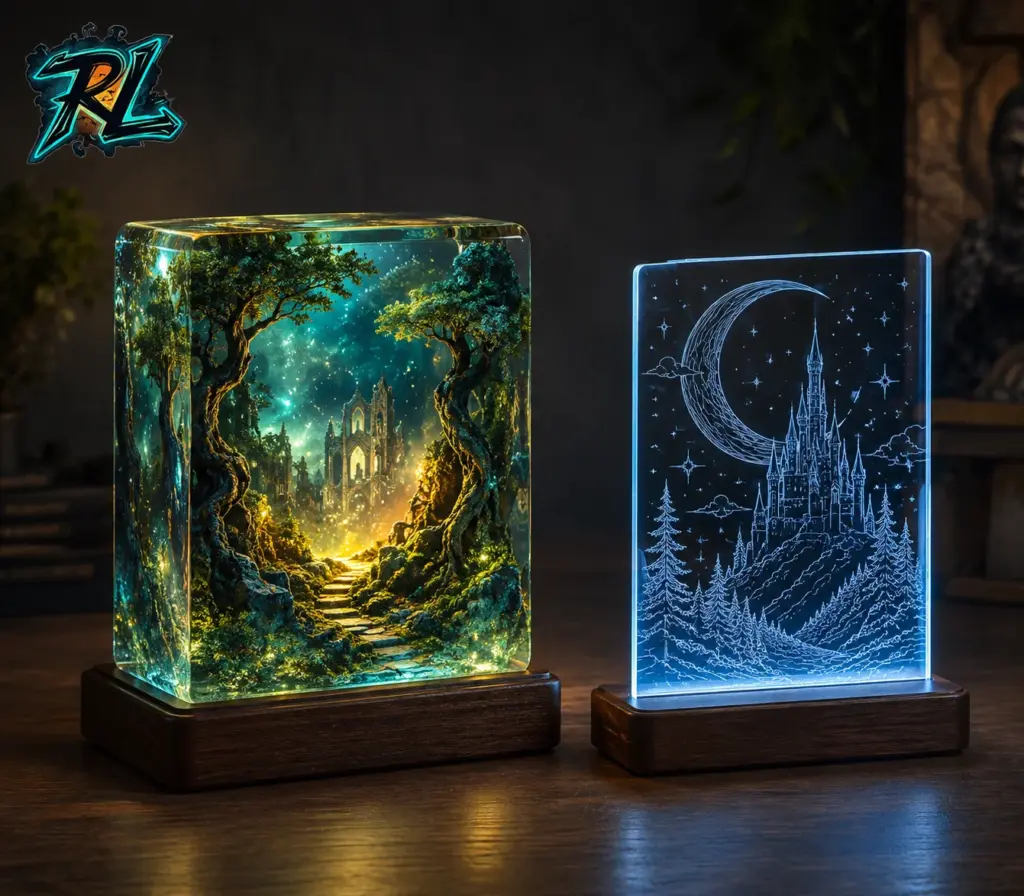
Epoxy resin lamp vs acrylic lamp: A cast resin diorama and a laser-engraved acrylic panel demonstrate two different approaches to decorative LED lighting.
Main epoxy resin lamp vs acrylic lamp differences
The most useful comparison examines how each material performs in real settings. The following factors help explain why one lamp may suit collectors while the other works better for practical, lightweight decoration.
Visual depth and artistic detail
Epoxy resin creates genuine depth by allowing artists to layer miniatures, suspend effects, and build complete scenes within the material. The design retains its volume and visual appeal from multiple angles.
Acrylic lamps typically feature engraved outlines on a flat panel. Although the result looks clean and modern, its 3D effect relies on perspective. Acrylic is often better for detailed line art, lettering, and graphic symbols.
In the epoxy resin lamp vs acrylic lamp comparison, resin excels at immersive miniature storytelling, while acrylic suits simple graphics and personalized text.
Lighting performance
Acrylic directs LED light efficiently through engraved panels, making lines and patterns glow brightly. This makes it ideal for signs, logos, nightlights, and energy-efficient decorative displays.
Transparent epoxy also transmits light, though clarity depends on its quality, thickness, pigments, bubbles, and embedded elements. Unlike acrylic’s glowing outlines, resin distributes light throughout an entire scene.
The Armored Titan Lamp, for example, uses adjustable RGB lighting to highlight hand-painted armor, smoke, buildings, and layered battlefield details. It creates a more cinematic effect than a typical engraved panel, though its construction is more complex.
Weight, strength, and scratch resistance
Acrylic lamps are lightweight, easy to reposition, and often feature replaceable panels. However, their surfaces can scratch easily when cleaned with abrasive materials.
Epoxy lamps are heavier and better protect embedded artwork, but strong impacts may chip the edges or damage the polished finish. Larger pieces should be placed on sturdy furniture.
Ultimately, the durability of an epoxy resin lamp vs acrylic lamp depends on material quality, thickness, craftsmanship, construction, and everyday care.
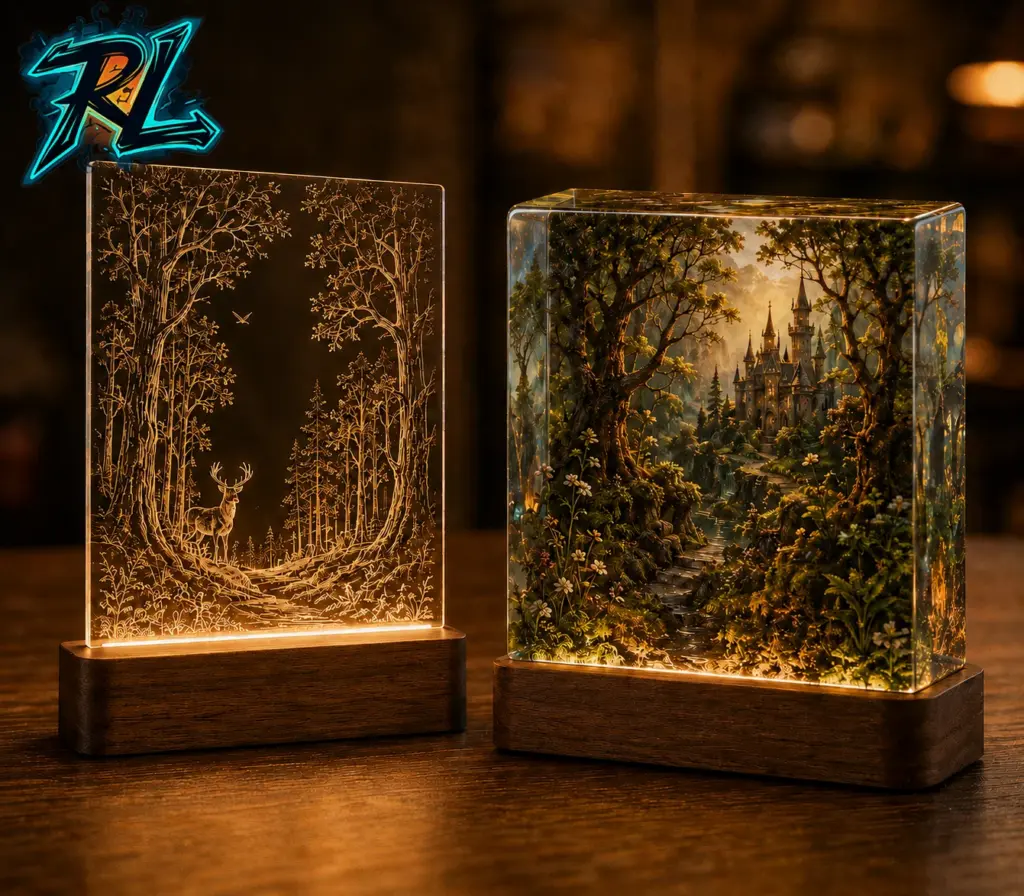
Epoxy resin lamp vs acrylic lamp: A lightweight acrylic panel fits into an LED base, while a solid resin block securely preserves a layered miniature scene.
Customization possibilities
Acrylic works well for names, dates, messages, logos, and portraits converted into line art. Laser engraving also allows fast production with precise, consistent results.
Resin offers more detailed personalization. Customers can request specific figures, colors, engraved elements, flowers, photographs, or keepsakes embedded within the casting. Each layer adds meaning, though complex custom designs require more production time.
The Luffy Gear 5 – One Piece Awakening Lamp demonstrates resin’s versatility by combining sculpted clouds, a hand-painted character, energy effects, detailed terrain, and multicolor lighting in one display.
Comparing price, care, and long-term use
Price alone cannot determine the better lamp. A realistic epoxy resin lamp vs acrylic lamp evaluation should consider craftsmanship, maintenance, replacement options, and the purpose of the display.
Cost and production time
Acrylic lamps are typically more affordable because their flat panels are quick to cut and engrave. Their lightweight design also reduces shipping costs, making them ideal for gifts, branded displays, children’s nightlights, and bulk orders.
Resin lamps cost more due to their labor-intensive process, from sculpting and painting to casting, polishing, and LED installation. Custom pieces may take weeks to complete, so the price should reflect genuine craftsmanship, material clarity, fine details, reliable lighting, and after-sales support.
Cleaning and maintenance
Clean acrylic with a soft microfiber cloth and a specialized solution. Avoid rough paper, ammonia-based cleaners, and abrasive pads, as lighting makes scratches more noticeable.
For resin, use a dry microfiber cloth to remove dust. Wipe stubborn stains with mild soap and a damp cloth, then dry immediately. Keep it away from harsh chemicals, hot water, sunlight, and prolonged heat.
Proper care helps both materials last longer. Resin may yellow under UV exposure, while acrylic can scratch or chip if handled carelessly.
Environmental and practical considerations
Neither material should automatically be described as environmentally friendly. Their overall impact depends on raw materials, manufacturing efficiency, product lifespan, repairability, packaging, and disposal options.
A replaceable acrylic panel can extend the usefulness of one LED base. A well-made resin lamp may remain desirable for years because its enclosed artwork functions as a permanent collectible. Buyers should prioritize durable construction and designs they genuinely intend to keep.
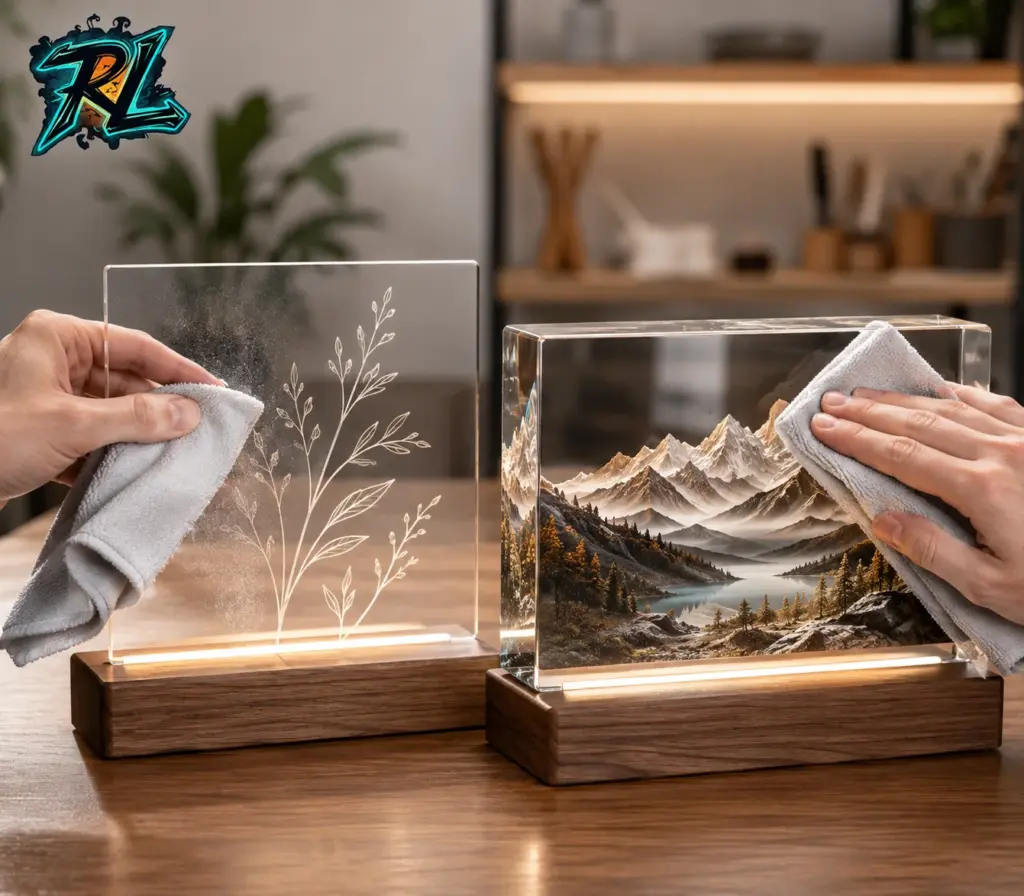
Epoxy resin lamp vs acrylic lamp: Gentle microfiber cleaning preserves the clarity of both acrylic panels and polished epoxy resin surfaces.
Which decorative lamp should you choose?
The best option in the epoxy resin lamp vs acrylic lamp comparison depends on your priorities. Choose acrylic for an affordable, lightweight design featuring text, logos, or clean engraved artwork. Replaceable panels also let you update the display without changing the LED base.
Choose epoxy resin for genuine 3D depth, handcrafted detail, embedded keepsakes, or collector appeal. The Alien Lab v1 – Sci-Fi Experiment Lamp, for example, features a suspended creature, laboratory details, and an illuminated environment that flat acrylic cannot fully recreate.
Before purchasing, check the size, lighting controls, power source, warranty, care instructions, and production time. Review photos from multiple angles to evaluate the design accurately.
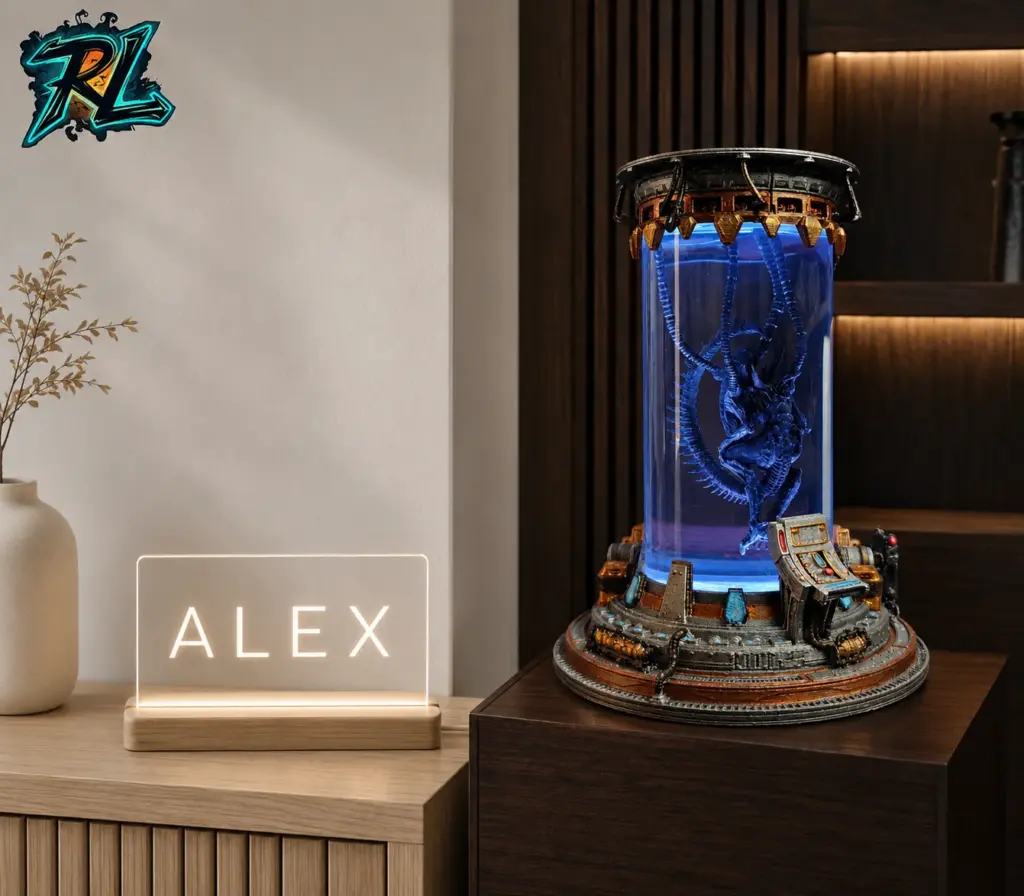
Epoxy resin lamp vs acrylic lamp: An acrylic name light suits minimalist decor, while an illuminated resin diorama becomes a collector’s centerpiece.
Resin Lamp LLC celebrates handcrafted illumination
Choosing between an epoxy resin lamp vs acrylic lamp is easier when you decide between graphic simplicity and handcrafted depth. Resin Lamp LLC creates immersive 3D nightlights using transparent casting, hand-painted miniatures, and LED effects.
With a U.S. representative office and a workshop in Vietnam, the brand serves international customers under export-focused standards. Personalization options include custom models, engraved names, and meaningful keepsakes embedded in clear resin, supported by an LED warranty and professional care guidance.
For true dimensional art and personal storytelling, Resin Lamp LLC offers a distinctive handcrafted alternative.
Whether you’re searching for a stunning resin lamp, anime-inspired decor, or a personalized gift, Resin Lamp LLC is here!
Contact us:
📧 resinlampart@gmail.com
🌐 https://resin-lamp-llc.com/


