
Mould is the foundation of accurate resin casting, shaping everything from simple coasters to layered nightlights and miniature keycaps. This guide explains how casting forms work, compares silicone designs, outlines safe preparation and pouring, and solves common defects such as bubbles, leaks, and cloudy surfaces. You will also learn how professional makers preserve fine detail, maintain reusable tools, and turn original concepts into illuminated resin art.
What is a Mould in resin crafting?
In casting, Mould is a hollow negative form that shapes liquid or pliable material while it cures. The keyword uses British spelling; “mold” is preferred in American English. Here, both describe a production tool rather than fungus.
For resin art, the cavity controls dimensions, texture, gloss, and embedded objects. A precise form can reproduce figurine panels, a keycap stem, or an illuminated block; every unwanted seam and scratch also transfers to the casting.
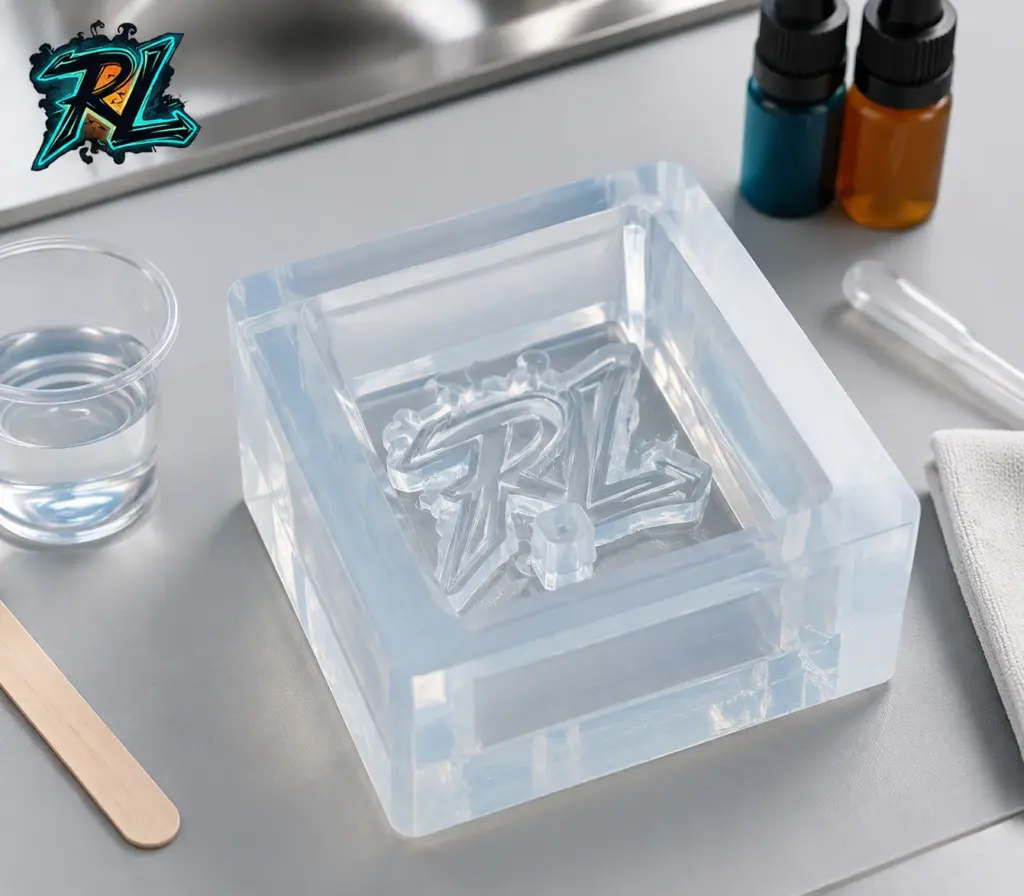
A transparent silicone casting form reveals a clean cavity prepared for a detailed epoxy pour.
Why the right Mould determines resin quality
Epoxy reproduces the surface it touches, so form material and design affect clarity, release, waste, and product life.
- Accuracy, texture, and repeatability: Silicone captures fine texture while flexing around undercuts. A polished master produces gloss; a scratched master repeats those marks. Stable walls also keep bases, LED channels, and keycap stems consistent.
- Shape, volume, and resin behaviour: Tall lamp blocks produce more curing heat than shallow charms. The form must resist bowing, while its known volume helps calculate epoxy and plan layers that prevent overheating or drifting miniatures.
Common types of casting forms for epoxy projects
The correct structure depends on flat faces, undercuts, fragile projections, seam placement, and release direction.
One-piece silicone Mould
A one-piece form resembles an ice tray and suits coasters, pendants, ornaments, and shallow panels. Setup is fast, but deep undercuts may trap the casting or damage fine parts.
Two-part and multi-part designs
Two-part forms meet at a planned parting line. Registration keys align the halves; a pour channel and vents guide resin and air. Complex figurines may need extra sections to release wings, weapons, or mechanical details.
Rigid forms for large geometric lamps
Acrylic, polypropylene, or sealed boxes create straight resin blocks. Secure joints and a level base stop thin epoxy escaping; flexible silicone inserts can support intricate subjects.
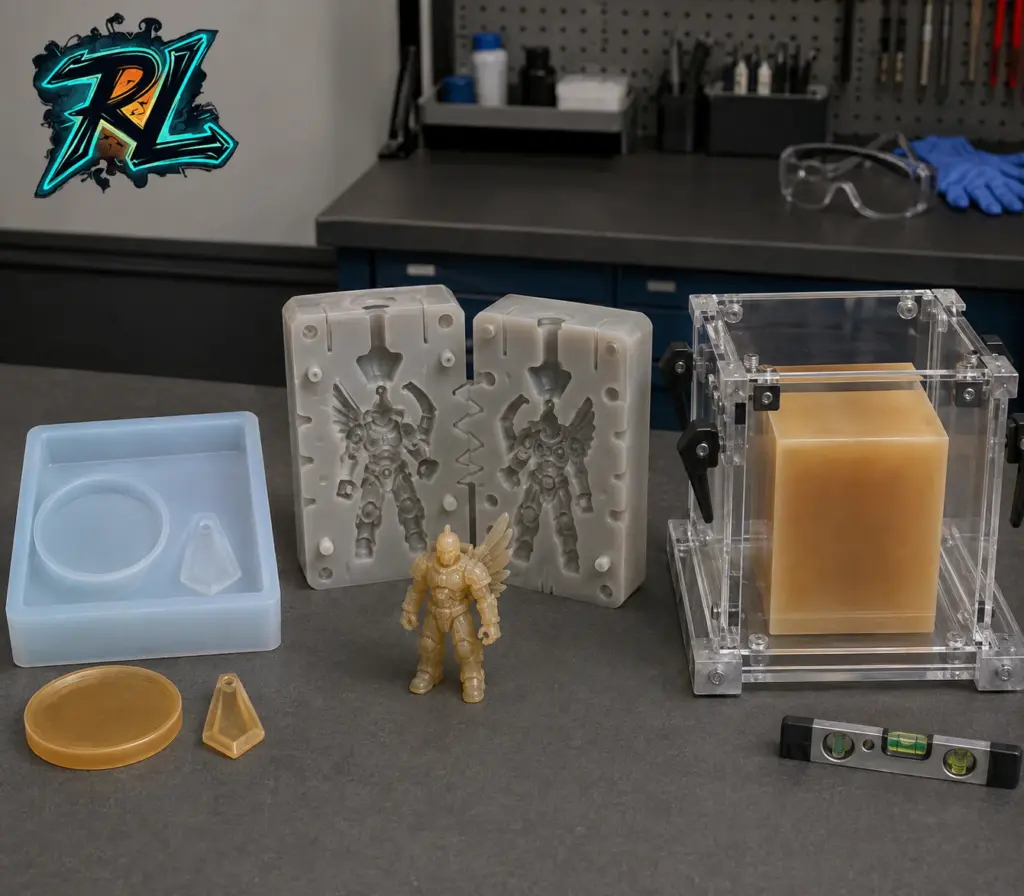
One-piece, two-part, and rigid box designs illustrate how object geometry changes the casting strategy.
How to make a silicone Mould step by step
Plan the master, parting line, wall thickness, and release path before mixing silicone.
- Prepare the master and casting box: Clean the master and seal porous wood, clay, plaster, or 3D prints. Fix it in a leakproof box with strong surrounding walls. Add registration keys and vents for a two-part design.
- Measure, mix, and pour silicone: Follow the stated ratio by weight or volume. Mix slowly, scraping the cup without whipping in air. Pour into the lowest corner and let silicone rise around the master; degas only when the formula permits it.
- Cure, separate, and test: Respect the cure time, release the master carefully, trim flashing, and inspect the cavity. A test pour confirms that seams close, vents work, and the piece releases without excessive force.
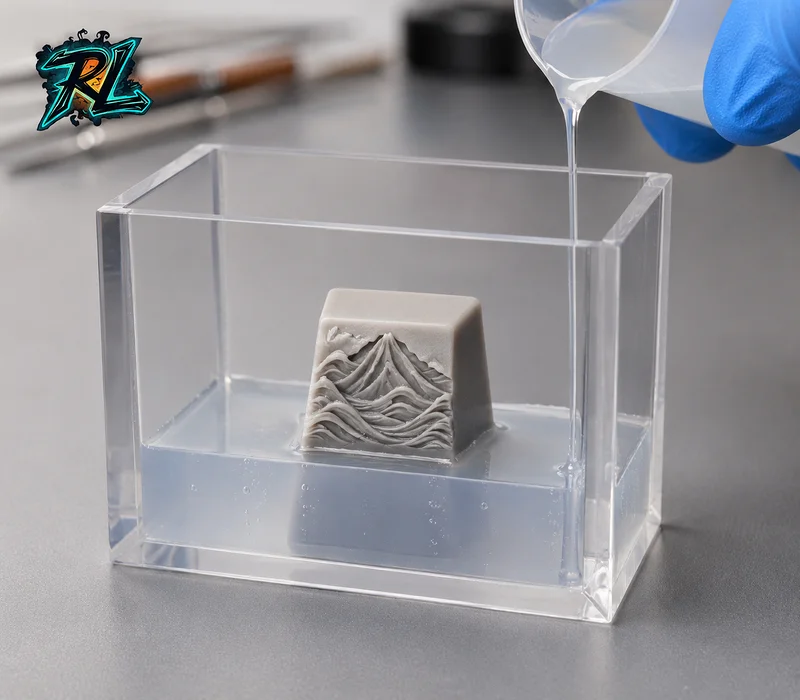
Silicone is poured in a narrow stream beside the master so air can escape as the level rises.
Using a Mould safely with epoxy resin
Liquid epoxy requires controlled handling. Follow each resin and silicone manufacturer’s safety data and instructions.
Prepare a controlled workspace
Wear nitrile gloves and eye protection, provide ventilation, cover the bench, and keep food away. Ensure the form is dry, clean, level, and compatible. Never exceed stated pour depth or working time.
Pour slowly and manage embedded scenes
Mix accurately and scrape the container. Pour slowly to reduce turbulence. For dioramas, build controlled layers and anchor figures, terrain, pigments, or lighting features at the appropriate cure stage.
Troubleshooting defects in a resin Mould
Failures leave clues about preparation, materials, temperature, mixing, or form design.
Bubbles, leaks, and incomplete details
Warm resin only within supplier guidance, pour low, and vent narrow peaks. Seal joints before mixing. Brush resin into fine details first; use pressure equipment only when rated for the project.
Sticky surfaces, cloudy resin, and distortion
Sticky areas suggest a wrong ratio or incomplete mixing. Moisture, contamination, incompatibility, or excess heat can cause haze. Reinforce large boxes, and never address cure failure with random heat or extra hardener.

A side-by-side quality check compares a bubble-free clear casting with leaks, haze, and distorted edges.
Care and storage for a reusable Mould
After demolding, remove loose resin without blades that could score the cavity. Use approved cleaning methods and dry the form completely.
Store it flat and covered, away from dust, sunlight, heat, and weight. Do not fold thin walls. Use release agent only when recommended; excess spray can dull the surface.
Mould craftsmanship and custom resin art from Resin Lamp LLC
Resin Lamp LLC is where the essence of resin crafts is celebrated. By blending masterful casting techniques with high-end aesthetics, the studio turns raw resin into one-of-a-kind 3D nightlights, dioramas, and artisan keycaps with remarkable clarity and depth.
Examples include the Galaxy Chibi Triangle Resin Lamp with crisp character details, the textured GOLUM Resin Lamp, and the mechanical NIER Diorama Resin Lamp—each requiring accurate replication and controlled layers.
The brand serves domestic and international markets through a United States representative office and a crafting workshop in Vietnam. Customers can request bespoke models, chosen colours, engraved names, or meaningful keepsakes embedded in crystal-clear resin. Applicable lamps include dedicated LED-system warranty coverage and expert maintenance guidance, helping owners preserve both illumination and clarity with confidence.
Whether you’re searching for a stunning resin lamp, anime-inspired decor, or a personalized gift, Resin Lamp LLC is here!
Contact us:
📧 resinlampart@gmail.com
🌐 https://resin-lamp-llc.com/


